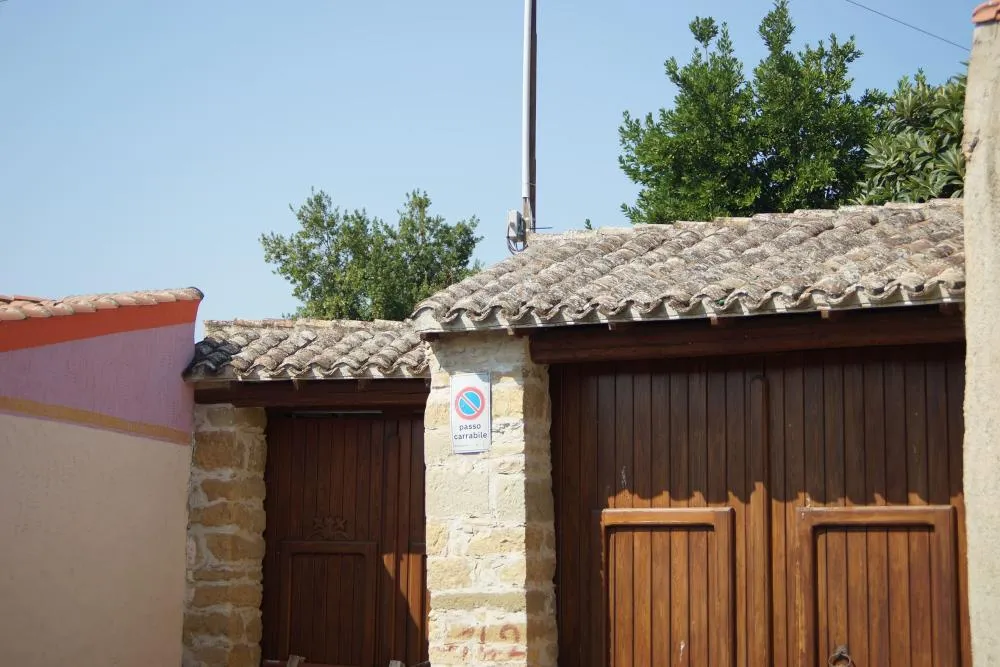
At the end of the alley, there are two portals with architraves, the structures of which were based on what were called the trilithons of prehistoric dolmens, of which there are many examples in Sardinia, in which one or more large stones support slabs laid horizontally.
Over time, this system was gradually superseded by the more stable archivolt, the invention of which is commonly ascribed to the Romans.
In our case, the entrances to the dwellings have load-bearing elements, called piedritti or abutments, consisting of square blocks of marl on which a third piece, made of wood and known as the architrave, is placed horizontally. The double-pitched roof is covered with Sardinian tiles. One side dates from 1915 and both have been restored.
One of the portals leads to a typical Campidano house with a large courtyard around which, as well as the residence of the owner and family, there were various rustic outhouses for farmyard animals, including the humble donkey that turned the millstone to grind wheat, and a loggia for sheep. A characteristic feature was the large kitchen, at the centre of which there was a sizeable fireplace, known as su foxile.
The second portal was commissioned by one of the many local wagoners, the hauliers of long ago. They covered vast distances in their carts and carried all types of products from the town to the city and back. A round trip from Marmilla to Cagliari took up to three days, with overnight stays to avoid any bandits and rest the animals.