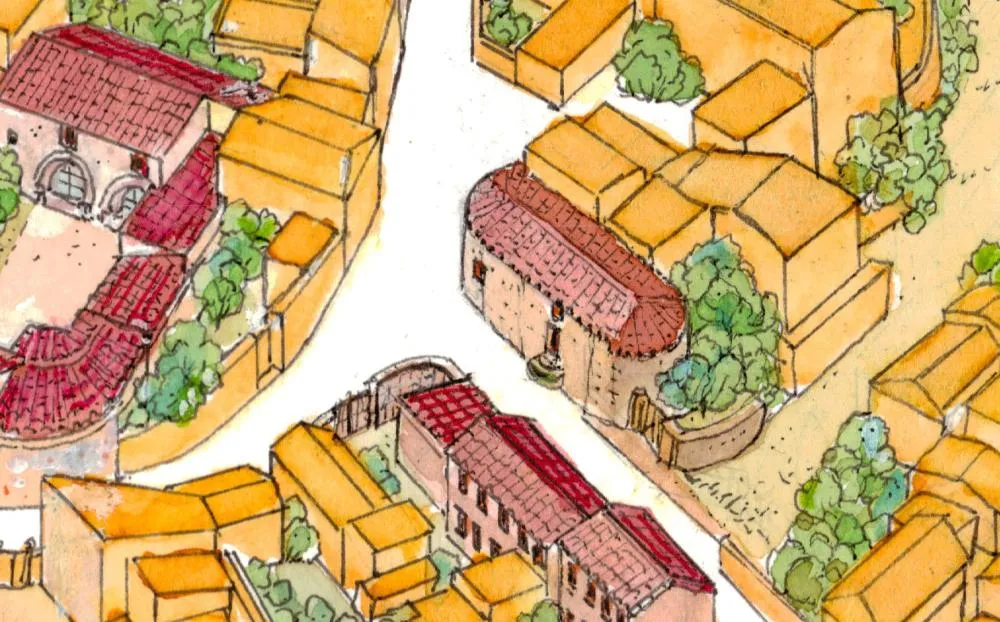

Simala’s historic centre offers visitors pristine, evocative views. One example is this modest home with a double-pitched roof and Sardinian tiles, built on an outcrop of rock so characteristic of most of the land on which the hamlet stands. The house has managed to defy the passing of time and is striking for its small windows and various styles of masonry, among which is a striking portion in raw earth bricks, the làdiri.
These were made of mud mixed with straw and left to dry in the sun and, since they were susceptible to soil humidity, were mostly used in the upper part of buildings. They also had low resistance to weather erosion and required a protective plaster that, in this case, is no longer there.
Further down the street is the old house of tzia Pepica, or Aunt Pepica, with low walls made of the marl and sandstone typical of the place. Floral motifs were engraved on the entrance door and the small wooden windows were painted in light blue, now faded.
The two houses have large, rough-hewn stones that formed the jambs of one portal that displays the effects of time and a second restored in recent years that has retained the original “snake-like” door knocker. Dating from 1918, it has a rounded arch in ashlars of square stones with the straw-colour typical of marl, the working of which was assigned to the stonemason who, in our villages, not only carried out the building works but also created artefacts for a wide variety of uses, such as the grindstones of family mills and large and small troughs for livestock.